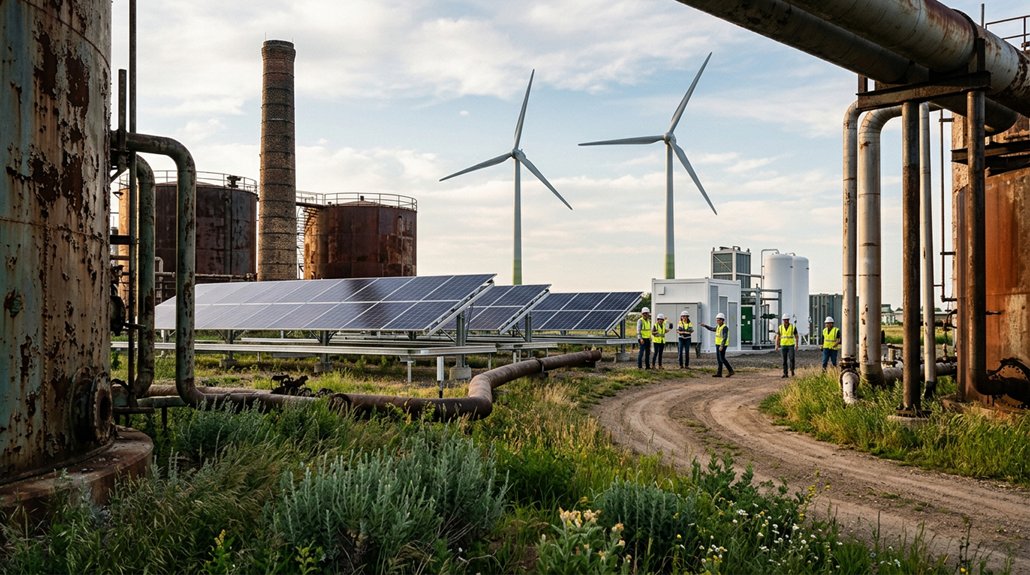
A site marked for retirement may sit close to a growing constraint on the grid. That could affect its future value, but proximity alone is not a business case.
Start by assessing the asset’s condition, remaining life and limits on retrofitting. Then compare options such as generation, storage and low-carbon fuels against their costs, likely demand and operational requirements.
Phase any investment through pilots and clear decision points. This can help protect cash flow while testing whether an option works in practice. Before proceeding, identify the constraint most likely to undermine the case, and decide how you will test it.
Assess Legacy Energy Assets for Reuse
Before retiring legacy energy infrastructure, assess whether it could serve a lower-carbon purpose. The decision should rest on evidence about the asset, the site and the cost of conversion—not on the appeal of the idea alone.
Assess legacy infrastructure for credible lower-carbon uses before retirement, weighing asset condition, site constraints and conversion costs.
Begin with an inventory of each asset’s location, capacity, condition, ownership and operating history. Review inspection records and arrange field assessments where needed. These checks can reveal deterioration, safety or compliance concerns, and help estimate how much useful life remains.
Next, test whether a retrofit is practical. Consider engineering constraints, site access, grid connections, permits and the cost of necessary upgrades. Set these against the costs and liabilities of decommissioning, using the same assumptions and time frame for each option.
Some information will be incomplete. Record assumptions, assign confidence levels to uncertain data and prioritise assets where further investigation could change the decision. I’ve found that a clear, consistent screening process helps leaders direct capital towards the most credible opportunities while keeping transition risks in view.
This is general information, not financial, legal or investment advice.
Compare Cleaner Energy Uses for Each Asset
Once an asset passes initial screening, compare the cleaner energy uses it could support. These might include renewable generation, energy storage or low-carbon fuels. The right choice depends on the site and the business, not on the appeal of a technology.
Start with practical constraints: grid access, available land and water, equipment condition and nearby demand. For generation, assess the quality of the energy resource and the capacity to connect to the grid. For storage, consider how long energy must be held and how often the system could cycle.
If pipelines or terminals remain viable, assess whether they could handle cleaner fuels, such as hydrogen or biofuels. Check the changes required and whether the existing infrastructure is suitable.
Compare each option on emissions, output, operating requirements and compatibility with the asset. Where combustion continues, include the controls needed to manage emissions. Then rank the options against measurable performance and strategic fit. This gives leaders a clear basis for deciding which use merits further work.
Plan and Fund a Lower-Risk Conversion
After ranking the viable uses, build a conversion plan that limits capital at risk and protects day-to-day operations. For each project, assess its technical readiness, required upgrades, likely downtime and cash-flow profile. Use that assessment to sequence the work, pilot uncertain technologies and set clear decision gates before committing further funds.
Compare funding options, including internal budgets, strategic partners and project finance. Consider each against your cost of capital and the returns your business needs. I’d also ask who carries the risk if costs rise or benefits arrive later than expected.
Track progress against practical milestones: lower operating costs, new revenue and better use of existing assets. Keep contingency funds available, assign an accountable owner to each project and review performance regularly. If the evidence changes, adjust the scope before overruns put the expected returns at risk.
Manage Permits, Policy, and Market Risks
Permits, policy changes and market volatility can alter a conversion’s cost, timetable or expected return. Identify the relevant authorities early, along with approval dependencies, consultation requirements and deadlines that could affect the critical path. Give each submission a clear owner, track progress and allow extra time for approvals with uncertain outcomes.
Test how changes to incentives, emissions rules and grid connection requirements could affect the business. Don’t base an investment decision on support that hasn’t been confirmed. I’d also make clear who’s responsible for monitoring policy changes and when the assumptions will be reviewed.
Track commodity prices, power markets and offtake terms against thresholds that would prompt action. Use sensitivity analysis to see how changes affect cash flow, then consider hedges or flexible contracts where the exposure is material. Review assumptions at least quarterly and update the contingency plan when regulations or market conditions change. This is general information, not financial, legal or investment advice.
Conclusion
Treat the energy transition as a portfolio decision, not a single bet. Start by listing your assets and assessing their condition. For each one, compare retrofit options against engineering limits, planning requirements, grid access and likely demand.
Phase investment through pilots and clear approval points. This helps protect operations while testing whether a project can deliver the expected returns. I would treat the International Energy Agency’s estimate that clean energy investment will reach $2 trillion in 2024 as evidence of where capital is heading, not proof that any individual project will succeed.
Screen each option carefully before committing further capital. The aim is to identify where legacy infrastructure can support sustainable value—and where it cannot.