A 15% improvement in restaurant margins need not depend on across-the-board price rises or removing popular dishes. Begin by using point-of-sale data to compare each item’s sales and contribution margin. Then decide how to price and present the dishes that perform best.
Small menu changes can influence what guests order, but their effects should be measured across dayparts and seasons. First, identify the figures that matter most to your business, then use them to guide decisions and assess the results.
Use Menu Engineering Data to Rank Dishes
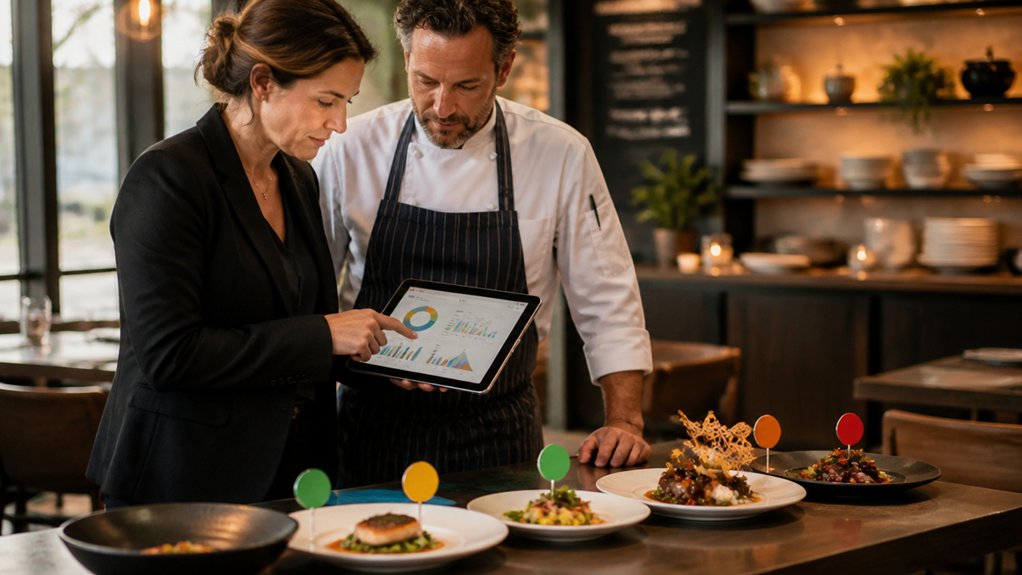
Rank each dish by sales volume and contribution margin: the revenue remaining after ingredient costs. Use recent point-of-sale data to identify high and low performers, then compare results by daypart and season. This helps you distinguish dishes that attract orders from those that make a stronger contribution.
Look for patterns over time rather than reacting to one unusually busy week. Give consistently strong performers clear menu placement and accurate, appealing descriptions. Before removing weaker dishes, test whether changes to their position, description or preparation could improve results.
Consider the operational picture too. Preparation time, waste and kitchen bottlenecks can affect both a dish’s performance and its profitability. Use the ranking to decide where to focus: which dishes to promote, review or retain, and what further evidence you need before making a change.
Calculate Contribution Margins and Set Prices
A dish’s contribution margin is its selling price less its ingredient cost. Compare margins across the menu, but don’t mistake this figure for profit: labour, packaging and waste also affect what each dish earns.
Use a consistent method to allocate these costs. Check supplier invoices and portion sizes regularly, and recalculate when a recipe or supplier changes. Even modest cost increases can narrow a margin.
Set prices with your target margins, local demand and competitor prices in mind. Then review sales data to see how customers respond. A clear, considered price can communicate value; it shouldn’t obscure the costs behind it.
I advise growing businesses to treat pricing as an ongoing decision, not a one-off calculation. Track each dish’s margin over time and use the evidence to decide whether to adjust prices, portions or ingredients.
Highlight High-Margin Items on Your Menu
Once you have identified dishes with strong contribution margins and steady demand, make them easier for customers to notice.
Use menu placement and concise descriptions to draw attention to profitable choices without overwhelming guests.
Emphasise value rather than simply promoting low prices.
Show customers what makes a dish worth choosing, rather than relying on discounts to drive sales.
- Place profitable dishes in prominent sections of the menu.
- Write clear, specific descriptions that make each dish appealing.
- Use restrained visual cues, such as a box or an icon.
- Pair high-margin dishes with complementary sides.
- Keep the layout uncluttered so customers can choose easily.
Base each cue on sales and margin data. Highlight dishes that suit your brand and satisfy customers; visibility is only useful when it’s credible. Decoration alone won’t improve a dish’s performance.
Test Menu Changes and Track Profit Growth
Treat every menu change as a test, not a permanent fix. Before adjusting a description, price or position, record a baseline for item sales, food costs and contribution margin. Then change one variable at a time. This makes it easier to see what’s driving the result.
Where possible, compare similar service periods or locations, using a fair method of selecting which will receive the change. Allow enough transactions to distinguish a meaningful shift from normal variation.
Analyse results by menu category, daypart and sales channel. Base category decisions on customer demand and margin potential, not assumptions. Keep changes that improve profit without reducing customer satisfaction; revise or reverse those that do not.
Review performance weekly, record what you changed and why, and decide what to test next. Reinvest gains where they’re most likely to support the business’s priorities.
Conclusion
Treat menu engineering as an ongoing discipline, not a one-off exercise. Use point-of-sale data to rank dishes, calculate their true contribution margins and set prices that reflect both costs and local demand.
Give profitable favourites clear, restrained prominence on the menu. Test changes before making them permanent, then review performance by daypart and season. Consider guest feedback alongside the figures: a dish may be profitable on paper but still affect satisfaction if its price or presentation misses the mark.
I advise growing businesses to make decisions through regular review rather than instinct alone. Keep what works, adjust what does not, and protect the guest experience as you improve margins.