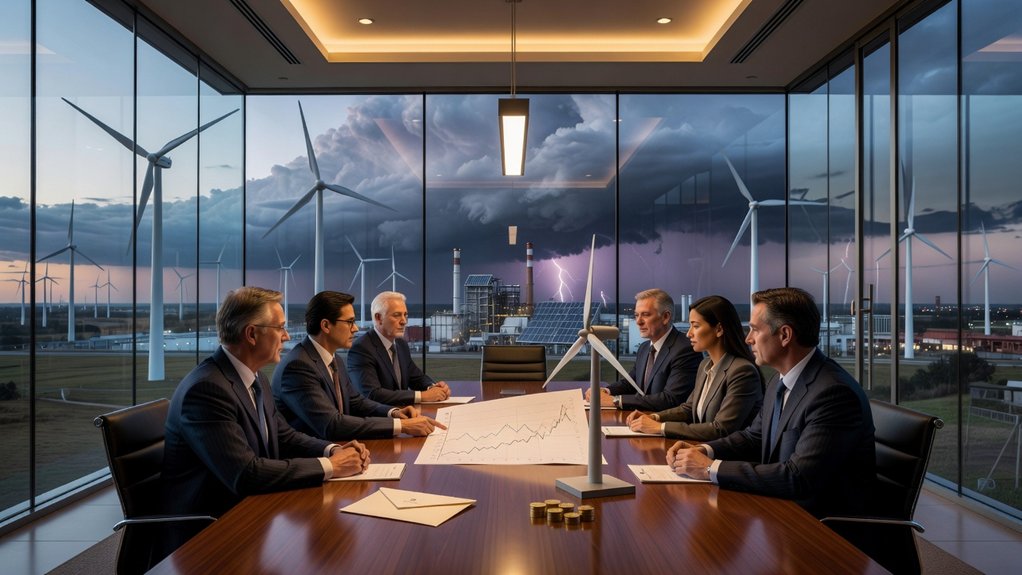
When markets are volatile, leaders must decide how much cash to return to shareholders and how much to invest in the net-zero transition. Test both choices against higher borrowing costs, weaker demand and supply disruptions. At the same time, keep a close watch on liquidity and upcoming debt maturities.
Set clear thresholds for when to protect cash, maintain dividends or proceed with investment. These should reflect the business’s ability to meet its commitments without sacrificing long-term value. I find the hardest part is agreeing in advance what evidence would justify a change of course. Decide which indicators matter, who will review them and when.
How Market Volatility Changes Capital Decisions
Volatility should change how you commit capital, not automatically stop you investing. When prices and cash flows are less predictable, test each project against several scenarios: higher borrowing costs, weaker demand and disrupted supplies. Ask whether it remains viable if more than one of these pressures occurs at once.
Keep a close eye on liquidity, debt repayment dates and expected returns. Set clear points at which you’d delay, reduce or stop a commitment, and review them as conditions change. This helps preserve flexibility while keeping long-term priorities in view.
Include climate-related risks in the assessment. Extreme weather, regulation and changes in technology can affect an asset’s value and operating costs. Compare these exposures with your organisation’s risk tolerance and shareholders’ expectations, then make the thresholds for action explicit.
In my experience, disciplined capital decisions depend on clear assumptions and timely review. Use evidence to decide what the business can afford, what it should prioritise and what would prompt a change of course. This is general information, not financial, legal or investment advice.
— Angus Fleming, founder of Fleming Business Consultancy, London; former consultant to FTSE 100 and S&P 500 companies, now advising growing businesses worldwide.
How to Balance Dividends and Net-Zero Investment
Balancing dividends with net-zero investment begins with a realistic view of cash flow, financing needs and emissions targets. Forecast operating cash under a range of price and demand scenarios. Then set a dividend range that protects liquidity and preserves the capacity to fund the transition.
“Set dividends against realistic cash-flow forecasts to protect liquidity and preserve investment capacity for the net-zero transition.”
Treat the timing of dividends as a practical tool. If volatility puts planned investment at risk, adjust the payout before committing to abrupt cuts or weakening the programme. Assess each capital commitment against emissions milestones, financing costs and risk-adjusted returns.
Include climate risks in stress tests. Consider how policy changes, asset exposure and energy prices could affect both shareholder distributions and investment capacity. Review assumptions quarterly and explain the trade-offs clearly to investors.
In my experience, the key is to make the choices explicit: decide what level of dividend the business can sustain while meeting its transition commitments, and revisit that decision as conditions change.
Angus Fleming is founder of Fleming Business Consultancy in London. A former consultant to FTSE 100 and S&P 500 companies, he now advises growing businesses worldwide. This is general information, not financial, legal or investment advice.
How to Choose Climate Investments That Build Value
Climate investment should reduce emissions while strengthening your business’s returns and resilience. I advise leaders to compare projects on three points: the cost of cutting emissions, the expected cash flow and the risks posed by climate change.
For each option, assess the capital required, likely operating savings and payback period against the same return threshold. Test how the case changes with different energy prices, carbon costs, policy changes and assumptions about the asset’s useful life. Model both favourable and adverse outcomes before committing funds.
Prioritise projects that protect essential operations, reduce resource use or support reliable sources of revenue. Set clear milestones and track both emissions and financial performance. Review the results as technology and market conditions change, and be prepared to redirect capital when the evidence points to a stronger return.
This is general information, not financial, legal or investment advice.
How to Explain Capital Trade-Offs to Shareholders
Shareholders need a clear explanation of why you’re directing capital towards one priority rather than another. Set out how you weigh dividends, resilience and investment in net zero against expected returns, funding needs and market risks.
Compare options on a consistent basis. Consider projected cash flows, payback periods, emissions reductions and downside scenarios. Explain the assumptions behind your analysis so shareholders can judge the trade-offs for themselves.
Your plan should address shareholder expectations while protecting the business’s long-term competitiveness. Set milestones against measurable outcomes, then report progress consistently. If assumptions change, explain what that means for expected returns and timing.
In my experience, a disciplined explanation matters as much as the decision itself. It helps leaders manage risk and gives shareholders a sound basis for understanding how capital is being allocated.
Conclusion
A market shock can coincide with your next investment review. Treat that possibility as a test of your capital plan. Can the business protect liquidity, meet debt obligations and fund credible net-zero milestones without committing to dividends it may not be able to sustain?
Assess each decision against changes in borrowing costs, customer demand and supply risks. Set clear thresholds for when to pause investment, adjust dividend payments or redirect funds. Make those decisions before pressure builds, and explain the reasoning to shareholders.
In my experience, trust depends on showing your assumptions and trade-offs plainly, then reporting progress against emissions goals with evidence. That gives shareholders a clearer view of both your financial discipline and your long-term direction.
Angus Fleming
Founder, Fleming Business Consultancy, London. Former consultant to FTSE 100 and S&P 500 companies; now advising growing businesses worldwide.