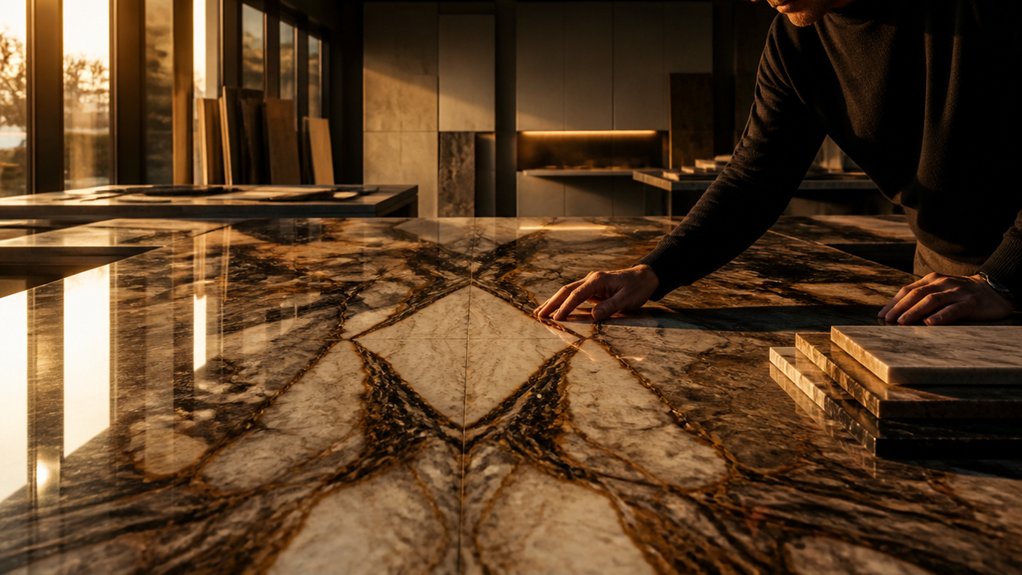
When positioning natural stone against engineered surfaces, focus on what buyers can verify: its geological origin, the variation between slabs and the way a full installation brings a distinctive pattern into a room.
Rarity alone is not a strong commercial argument. Help clients choose stone suited to the project, confirm that enough material is available and explain its care requirements before they commit. I would also encourage you to show how the stone will look across the whole installation, not just in a single sample.
The luxury case is strongest when you connect these practical details to natural stone’s defining quality: each piece reflects a geological history that engineered surfaces cannot reproduce.
Show What Natural Stone Does Best
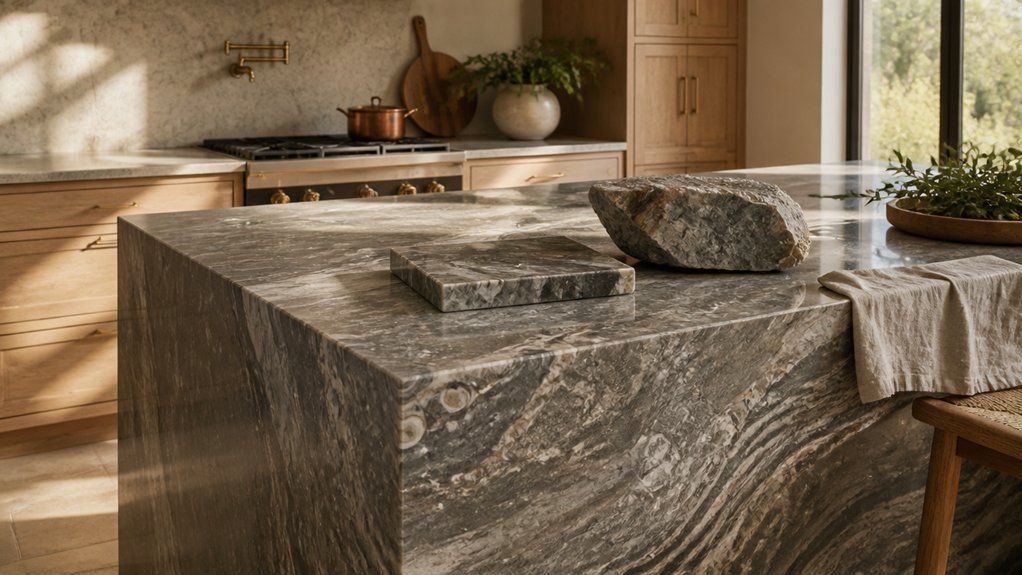
Natural stone offers qualities that manufactured surfaces can’t reproduce: geological variation, distinctive veining and depth formed over time.
The business case isn’t simply that every slab looks different. It’s that this difference can give a project a clear, individual character.
Help clients understand what they’re choosing. Explain where the stone formed, how it was quarried and which features distinguish it.
Show how variation in colour, veining and texture will appear across the intended installation, rather than relying on a small sample to tell the whole story.
For rare slabs, make the practical details clear: availability, dimensions and finish.
Clients can then weigh scarcity against design requirements and make an informed decision.
Use close-up photography alongside examples of stone in completed spaces.
Give your team precise language to describe natural variation and its contribution to a project’s lasting distinction.
Choose Natural Stone for the Right Project
Distinctive slabs can be persuasive, but natural stone isn’t right for every project. Begin with the client’s priorities, performance requirements and budget, rather than with the material you want to sell.
Ask how the surface will be used, what visual effect matters and which trade-offs the client is willing to accept. Then assess the options against those criteria. Natural stone can bring distinctive character to a space, but it may not suit every programme, maintenance preference or application.
Use a clear selection framework to compare materials and explain their value. Recommend natural stone when it genuinely meets the brief. That discipline helps build trust and strengthens your business.
Explain Stone Origins, Availability, and Care
Stone origins, availability and care
Before specifying stone, establish where it comes from and how its regional geology affects its colour, veining and natural variation. Ask for documented provenance and information about quarry practices, including relevant environmental and labour standards. These details help you assess both the material and the conditions under which it was produced.
Availability is a programme risk, not a detail to resolve after selection. Confirm current inventory, block availability, lead times and the quantity that can be reserved. Compare these with your installation milestones, allowing time for approval and delivery. If supply is uncertain, consider an alternative before the design depends on a particular stone.
Care requirements depend on the stone’s mineral composition and finish. Confirm which cleaners are suitable, and avoid acids or abrasive products where they could damage the surface. Ask whether sealing is needed and, if so, how often. Clear guidance helps you set realistic expectations and protect the stone’s long-term performance.
I advise growing businesses worldwide, and the practical principle is straightforward: verify supply and care requirements before committing. That gives your team a firmer basis for decisions and reduces avoidable disruption.
Explain Why Rare Slabs Feel Special
Rare slabs feel special because their geological patterns can’t be reproduced exactly. Each one can give a project a distinctive focal point, but rarity alone doesn’t make it valuable to a buyer.
When presenting a slab, explain what sets it apart: its veining, colour, availability and suitability for the project. Ask clients which features matter to them, and show how the stone will look in the space. This makes the choice more concrete than simply describing it as unique.
I advise growing businesses to support a product’s appeal with clear evidence. For natural stone, that might include its quarry and region of origin, how it was selected, and reliable information about its durability and sourcing. Be precise about what’s known, and avoid claims that can’t be verified.
The commercial case is strongest when the material’s distinctive character meets a client’s priorities. That gives buyers a sound basis for choosing a natural slab over a surface made for consistency.
Conclusion
Natural stone merchants should lead with what engineered surfaces cannot reproduce: geological variation, verifiable provenance and material shaped by place. Help clients match a stone to the project, confirm availability and understand its care requirements before they commit.
Then show how a distinctive slab can make an island or feature wall the defining element of a room. The U.S. Geological Survey estimates that Earth is about 4.6 billion years old. That deep history gives natural stone a story beyond its appearance—a point of difference worth explaining clearly to luxury buyers.
I would make that distinction practical: discuss the stone’s origin, variation and maintenance, and let clients see the actual slab they are considering. A compelling story matters most when it helps them make a confident choice.